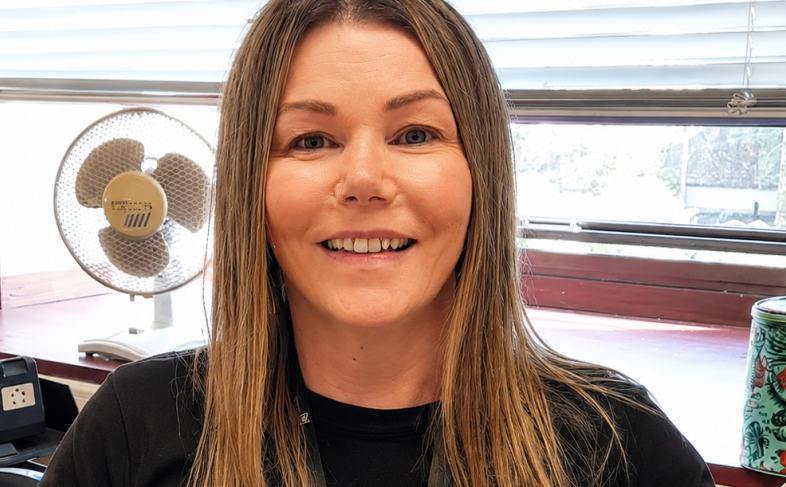
Lorna has worked in care since she was 18, progressing from care assistant in a residential home to deputy manager before moving into social work. Joining the complex care team brought a different pace and approach.
Working alongside people with learning disabilities can mean communicating differently, considering the environment and investing time in trust. A conversation that happens in one visit with somebody else may need several short meetings.
One anxious young person communicated through an iPad and found change difficult. Instead of expecting them to adapt to a conventional assessment, Lorna began with ten-minute visits, gradually giving them time and space to feel comfortable.
“Sometimes you need to slow everything down. The important thing is making sure you hear the person’s own view, not simply what other people think is best for them.”
Everybody is an individual
“Ten people can have the same diagnosis and still be ten completely different people. They will communicate differently, enjoy different things and need different kinds of support. You cannot begin with an assumption about what somebody will be like.”
Understanding individuality takes time. Lorna draws on families, colleagues and other professionals, but her relationship with the person remains central. Knowing someone helps her understand their strengths, ambitions and preferred way of communicating.
This knowledge also reveals where somebody can develop new skills, from travelling by bus and attending appointments to preparing for more independent living.
“When you see someone gain confidence and their face lights up when you arrive, that means a great deal. You know that trust is growing and that you are helping them move towards something that matters to them.”
Making decisions with people
Lorna is keen to challenge the idea that social work is about making decisions for people. In reality, assessment and support should be developed with the person.
People with learning disabilities are adults with their own rights, preferences and ambitions. They may want their own home, a concert, a holiday, time with friends or a visit to the pub. Like everyone else, they should be able to make choices, and sometimes mistakes, with support to understand and manage risk.
This can bring difficult conversations, especially when relatives who have protected someone throughout their life are understandably worried about greater independence.
“Our role is not to remove every possible risk, it is to listen to what the person wants, be honest about what is possible and work out how we can support them to try things safely.”
For one person, having a home of their own was a long-held ambition. When it became possible, their pride was unmistakable, a reminder that people can reveal capabilities others have missed when given opportunity, space and support.
Living an ordinary life in the community
Inclusion means more than attending specialist services. It means taking part in ordinary community life and being known first as a neighbour, customer, friend or familiar face.
Lorna recalls a man who enjoys visiting local pubs. People know him, look out for him and, where appropriate, keep in touch with his family; but importantly, he can enjoy a pint like anyone else.
“Inclusion means people living their lives, doing the things they enjoy and being part of their own community, not being defined by the support they receive.”
Relationships at the heart of the work
Social work operates in a challenging environment. Demand and workforce pressures can delay support, leaving staff to manage uncertainty while speaking openly with people and families.
For Lorna, those conversations carry personal responsibility: her name and professional practice sit behind the advice she gives. The commitment of colleagues across the complex care team helps.
“We have each other’s backs. If I am going into a difficult meeting, I know I can ask for support. We use each other as sounding boards, and our seniors and managers are always approachable.”
That mutual support helps staff retain the warmth and humanity that drew many of them to social care, keeping their focus on the person even when circumstances are demanding.
A heartfelt promise
For Learning Disability Week, Lorna pledged:
“Always see the person before the label, diagnosis or assessment. I will listen with an open mind, value every person’s voice and make sure their choices, rights, strengths and dreams remain at the heart of what I do. I will advocate, challenge barriers and never underestimate what someone can achieve when they are given the right support, opportunities and belief. I pledge to keep learning, keep listening and keep asking ‘what matters to you’ and to empower and to make a difference, one person at a time.”
Lorna’s pledge reflects what excellent social work often looks like in practice: patient, human moments that build trust, uncover strengths and help someone move towards the life they want.
Above all, it means refusing to reduce anyone to a diagnosis, assessment or list of needs, and continuing to ask what matters to them.