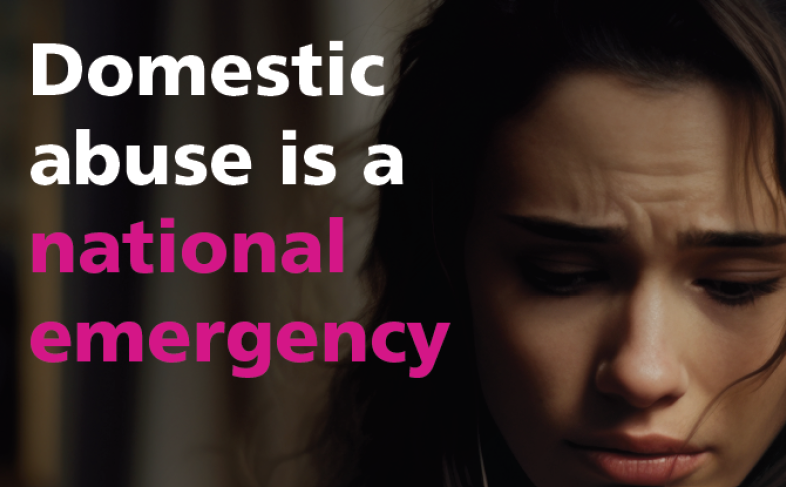
Domestic abuse remains a significant concern across Scotland. While it can affect anyone, national statistics show that women continue to face the highest levels of harm. In 2023–24, 81% of domestic abuse incidents recorded by Police Scotland involved a male perpetrator and a female victim.
There are many organisations across the region providing specialist support to people experiencing domestic abuse. One of these is Women’s Aid, which operates services in Dumfriesshire, the Stewartry, and Wigtownshire. Our colleagues at Women’s Aid Dumfries and Stewartry have kindly shared a powerful blog post on recognising abuse in relationships, including the lived experience of Sheila, a survivor who has generously allowed her story to be shared.
We are pleased to signpost their guidance below as part of our joint commitment to keeping people safe.
Women’s Aid – Am I in an abusive relationship?
If you’re wondering whether you’re being abused, that question alone is important. Abuse isn’t always obvious, and it doesn’t have to be physical to be real.
Here are questions you can ask yourself to help identify possible abuse:
Emotional / Psychological Abuse
- Do I often feel afraid of this person’s reactions?
- Do they insult, belittle or humiliate me (especially in front of others)?
- Do they tell me I’m “too sensitive” or that things didn’t happen the way I remember?
- Do I feel like I’m “walking on eggshells” around them?
- Do they blame me for their anger or harmful behaviour?
- Have I started doubting my memory, judgment or sanity because of them?
Controlling Behaviour
- Do they try to control who I see, talk to or where I go?
- Do they monitor my phone, social media or location?
- Do they make most decisions for me without my input?
- Do I need their permission to spend money or make basic choices?
- Have I become isolated from friends or family?
Physical Abuse
- Have they ever pushed, grabbed, hit, slapped, choked or restrained me?
- Have they thrown objects at me or damaged property during arguments?
- Do they block doorways or prevent me from leaving?
- Have they ever threatened to hurt me, themselves or someone I care about?
Sexual Abuse
- Do they pressure or force me into sexual activity?
- Do they ignore my “no” or guilt me into saying yes?
- Do they refuse protection or tamper with birth control?
- Do I feel unsafe or violated sexually?
Financial Abuse
- Do they control all the money?
- Do they prevent me from working or accessing my income?
- Have they put debts in my name without consent?
How You Feel Matters
- Do I feel smaller, powerless or trapped in this relationship?
- Have my confidence and self-esteem decreased since being with them?
- Do I feel relief when they’re not around?
- Do I make excuses for their behaviour to others?
Abuse is about power and control, not just anger or conflict. Healthy relationships may have disagreements, but they do not involve fear, intimidation, humiliation or control.
Sheila’s story:
I was in an extremely coercive, physical, emotional and financially abusive relationship for number of years. I contacted Women’s Aid for advice. Initially I received Outreach support.
The Outreach worker provided support around safety and emotional support around confidence and self-esteem. They worked on a safety plan to assist me to leave my abusive partner in a planned and safe way.
2 months later I made the decision, when the time was right, to leave and accepted an offer of Safehouse support.
I have fibromyalgia, chronic fatigue syndrome, dyspraxia and a form of dyslexia; so, my partner was my carer and was the main claimant on benefits. I had no control over our finances.
Staff at Women’s Aid applied for Housing benefit, and also Personal Independence Payment (PIP). I was awarded PIP and received a backdated payment. This enabled me to pay off rent arrears.
A referral to the council’s Homeless service was also made and accepted, and a budgeting plan was created to support me in managing my money. I expressed interest in furthering my education, Women’s Aid managed to get me enrolled in a college course and I was successful in securing a bursary.
Women’s Aid also supported me with domestic abuse intense work, helping me understand the dynamics of domestic abuse and the shapes and forms it can take. We also covered what healthy and unhealthy relationships look like.
A referral was made to Social Work on my behalf to identify a package of personal support and care. Disability support was put in place to assist me to manage independently in my home.
I was successfully re-housed from safehouse accommodation, with a care package to be transferred. I was supported to arrange Care Call and settle in my home.
Staff at Women’s Aid then applied for Community Care grant which was successful, and took me shopping to help me decorate and set up my new home.
I am now re-settled in my own home and living a fulfilled life, free from abuse with a robust care package in place that assists me to live independently.
I never thought any of this could have ever been possible. I believed the nasty words, the put downs and believed what happened to me must have been my fault. The day I made the call to Dumfries Women’s aid was the first day of my new life.
Dreams can come true; don't be afraid. My only regret was not doing it sooner.
Don't suffer in silence
If you would like support and a confidential listening non-judgmental ear you can contact:
Dumfriesshire and Stewartry Women’s Aid on 07710152772.
Wigtownshire Women's Aid on 01776 703104.