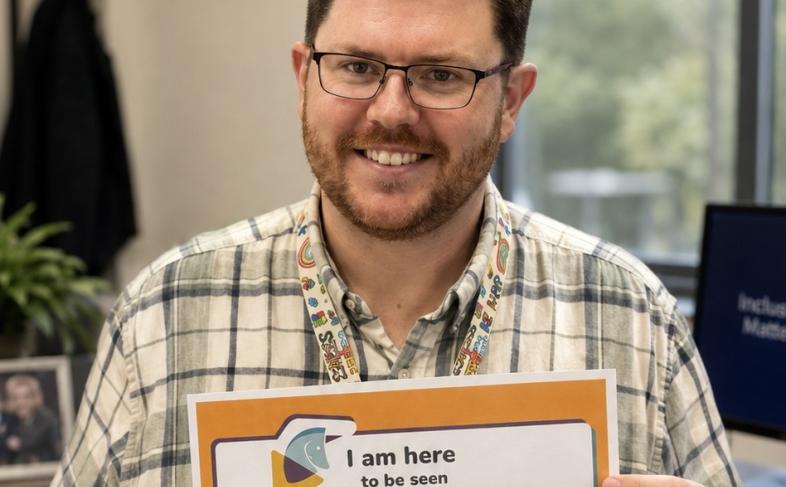
For Kieran, social work is personal. Before he became a social worker, he was a service user living with a physical disability. He remembers what it was like to need support, and to feel that his own voice could sometimes have been heard more clearly.
That experience stayed with him. It helped shape a simple promise at the heart of his work today: however someone communicates, he will make the effort to listen. For Kieran, people do not need to fit neatly into a system before they can be heard. The system needs to find a way to reach them.
Sometimes listening starts with a smiley face
Kieran carries a small communication device on his lanyard. It shows simple faces: happy, sad, angry and others. This is so someone can point to the one that best matches how they feel. It is a tiny, everyday tool, but it can open the door to a conversation that might otherwise be missed.
“I know what it feels like when people do not quite hear you. That is why I try to find a way in, whether that is through words, pictures, expressions or simply giving someone more time.”
For one person, good communication might mean easy-read information. For another it could be signs, pictures, body language, technology or meeting somewhere familiar and comfortable. Families, carers and others who know the person well may also help. There is no single right way to communicate; what matters is being patient enough to discover what works for that person.
Independence does not mean doing everything alone
Independence can look different for everyone. It might mean choosing where to live, deciding how to spend an afternoon, keeping in touch with friends, taking up volunteering or having more say over who provides support. Needing help does not take away a person’s independence. The important question is whether that help creates possibilities or closes them down.
This is why Kieran starts with the person rather than the service. What are they good at? What matters to them? What would they like to change? From there, he works alongside them and the people around them to build support that is safe, practical and gives them as much freedom as possible.
“The most rewarding moments are when someone achieves a level of independence they may have been told was not possible for them.”
The results can be ordinary and life-changing at the same time: having more freedom at home, returning to a favourite activity, volunteering, learning new skills or getting a job. As his team’s employability and assistive technology champion, Kieran helps people reach for those opportunities.
Why social workers keep showing up
The work is not always easy. People’s wishes, safety, legal duties and limited resources can pull in different directions. Families and professionals may care deeply but see the best way forward differently. Social workers have to hold those conversations with honesty, care and respect.
Behind the assessments and plans are people trying to help other people live well. The team works with families, carers, health colleagues, support providers, employability services and community organisations. They keep looking for practical answers because the choices being discussed are not abstract; they shape somebody’s home, relationships and future.
Finding the right balance together
Part of a social worker’s role is to look for the least restrictive way to support someone, helping them stay safe while keeping as much choice and independence as possible. That can mean exploring options which build confidence and avoid providing more support than a person needs.
“We should not impose our own idea of a good life. Our role is to help people understand their choices, take positive risks and pursue the life they want.”
For families and guardians, a different or lighter-touch approach can sometimes feel like support is being reduced. Kieran understands that these concerns come from wanting the best for someone. His role is to listen, explain the options clearly and work together to find a balance that feels safe, realistic and right for the individual.
A pledge beyond one week
For Learning Disability Week, Kieran has made the following pledge:
“Promote inclusion, listen to and value the voices of people with learning disabilities and support their right to live fulfilling, independent lives within their communities.”
That pledge is not only for specialist services. All of us can make communication more welcoming: use clear words, give people time, check we have understood and never assume that someone has nothing to say. A small card of faces on a lanyard may look simple, but in the right moment it can help somebody tell us something important.
This Learning Disability Week, we celebrate Kieran and colleagues across Complex Care and Support for work that often happens quietly and away from public view. Kieran began with the feeling that he could have been listened to more. He has turned that experience into a career built around making sure other people are not left with the same feeling. That is social work at its most human: meeting people where they are, opening up choices and making sure every voice has a way to be heard.