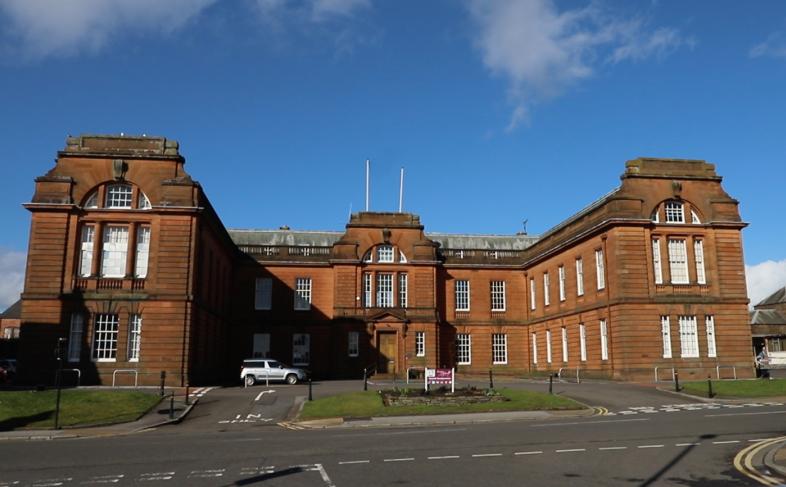
A report to the Economy and Infrastructure Committee on Tuesday 9 June outlines the findings of a wide-ranging early engagement exercise and sets out options for how a Visitor Levy could operate across the region. Councillors will be asked to decide whether to stop work on a Visitor Levy at this stage, or to proceed to a formal consultation on a proposed scheme. No decision has been taken at this stage on whether a Visitor Levy will be introduced.
The proposal follows new powers introduced through the Visitor Levy (Scotland) Act 2024, as amended, which gives councils the ability to charge a levy on overnight accommodation, with all income required to be reinvested locally in facilities and services substantially for, or used by, visitors.
Extensive engagement has already taken place with residents, visitors and businesses, including surveys, events and direct discussions with the tourism sector. A total of 1651 responses were gathered, providing a robust evidence base to help shape any future scheme.
The feedback shows high awareness of visitor levies across all groups. Although there is agreement on the importance of investing in infrastructure, services and promoting the region, the findings also show opposition to a Visitor Levy, with particularly strong opposition from tourism businesses.
The report also highlights ongoing pressures on local infrastructure linked to visitor activity, alongside the limited availability of alternative sustainable funding to support tourism infrastructure, destination management and sector development in the region.
If councillors agree to move forward to consultation, two possible charging approaches are presented in the report: a flat-rate model and a percentage-based model. Officers recommend consultation on a pilot flat-rate scheme, which would apply different nightly charges depending on the type of accommodation, with the highest rate set at £3 per night for some accommodation types and lower rates for others.
Under the proposed approach, any income generated would be reinvested locally to support priority areas identified through engagement. These include improving roads, paths, parks and public toilets, supporting tourism businesses and events – and promoting Dumfries and Galloway as a destination.
The report recommends that any scheme would be introduced on a pilot basis for three years, with monitoring throughout and a full review before any longer-term continuation is considered.
Councillors are also being asked to consider a 12-week formal consultation on a proposed scheme, with a final decision on whether to introduce a Visitor Levy to be taken by Full Council in autumn 2026, following consideration of the consultation feedback. The earliest a levy could be introduced would be 2028.
Chair of the Economy and Infrastructure Committee, Councillor Andy Ferguson, said:
“This report provides a clear and balanced assessment of the opportunities and challenges associated with a Visitor Levy. The recommendations will allow Members to take a measured, evidence-led approach and decide whether there is a case to test a more detailed proposal through formal consultation.
“It is important that we continue to listen carefully to the views of our communities, visitors and businesses before any final decision is taken.”
Vice-Chair, Councillor Tony Berretti, added:
“We know how important tourism is to Dumfries and Galloway, supporting jobs, businesses and communities across the region. At the same time, there are real pressures on local infrastructure and services linked to being a visitor destination.
“This is about considering whether further consultation is appropriate, and if so, how any proposal might be shaped in a fair, transparent and practical way.”
If agreed by committee, the council will move to a formal consultation phase on a proposed scheme. This will give residents, visitors and businesses a further opportunity to shape the proposals before any final decision is taken by Full Council.
The full report can be read at: Agenda for Economy and Infrastructure Committee on Tuesday, 9th June, 2026, 10.30 am | Dumfries and Galloway Council