Recycling can feel confusing. Does it really make a difference? Is it worth the effort? And what’s the deal with glass and soft plastics? If you’ve ever asked these questions, you’re not alone.
This Recycle Week (22 to 28 September), Dumfries and Galloway Council is joining the national ‘Rescue Me! Recycle’ campaign to help residents recycle more of the right things, more often, and to show that your efforts really do matter.
How our recycling system works
Our kerbside recycling service is designed to be simple and efficient. Most households use wheelie bins for recyclables (paper/card, metals, plastics) and non-recyclables (the grey bin). This standardised system allows us to use the same vehicles across different waste streams, saving money and making the best use of our resources.
But rest assured, your recycling is never mixed with general waste. Each vehicle collects only one type of waste at a time and is thoroughly cleaned before switching streams. By law, recyclable materials must be kept separate and we take that responsibility seriously.
In fact, 41% of all waste our council collects from kerbside, our recycling points and at our Household Waste Recycling Centres is recycled – whether that is metals, glass, paper/cardboard or garden waste. We are committed to increasing our recycling rate and ensuring as much waste is recycled as possible.
Where does your recycling go?
We know many people worry that their recycling ends up in landfill or shipped off to countries without proper waste infrastructure. That’s not the case here.
Every item collected is tracked and reported to the Scottish Environment Protection Agency (SEPA) via the Waste Data Flow system. Only authorised companies registered with SEPA or the Environment Agency handle your waste. This ensures it’s processed responsibly and transparently. You can even view the data yourself on SEPA’s website.
Why there’s no glass collection at the kerbside
When our current recycling system was introduced, the Scottish Government planned to rollout a Deposit Return Scheme (DRS) for glass that would have captured around 80% of glass from our households. Rather than ask you to use another recycling bin for the small amount of glass that would have been left over, the council decided to expand the number of glass recycling points across the region instead.
The Deposit Return Scheme has since been delayed and cancelled, so we’re waiting for updated guidance from the Scottish Government before making any changes. In the meantime, please continue using your local glass banks – they really do make a difference.
What to do with soft plastics
Soft plastics like bread bags, crisp packets and film lids can not be recycled through the council’s kerbside system.
If soft plastics are placed in your red recycling bin, they can contaminate the entire load. This means that a whole batch of otherwise recyclable plastics may have to be rejected and treated as general waste, simply because it’s no longer ‘clean’ enough to process.
The best option is to take soft plastics to supermarket collection points, which are now widely available across Dumfries and Galloway. These schemes are specifically designed to handle soft plastics and ensure they’re recycled properly.
If you can’t get to a supermarket, soft plastics should go in your non-recyclable (grey) bin. The Scottish Government is considering making soft plastic recycling compulsory in future and if the rules change, the council will let you know.
Why sorting at home matters
You might wonder why you have to sort your recycling at home. Can’t the council just do it? The answer is quality. The less mixed up the recycling is, the easier it is to turn it into something new. That’s why we use a “twin-stream” system: metals, plastics, and cartons go in the red bin, while paper and card go in the blue bin. This helps ensure that what we collect is recyclable.
Community recycling points
Across Dumfries and Galloway, you’ll find bring points for glass and textiles. We work with partners like Nathan’s Wastesavers to ensure textiles are reused or recycled – often sent to be worn again in West and East Africa or turned into new products. It’s a great way to give your old clothes a new lease of life and help others at the same time.
What happens to the waste from your grey bin?
Most waste from your grey bins is processed at our facility near Dumfries. It’s shredded, dried, and turned into fuel for electricity and heat.
Let’s rescue more, recycle more – together
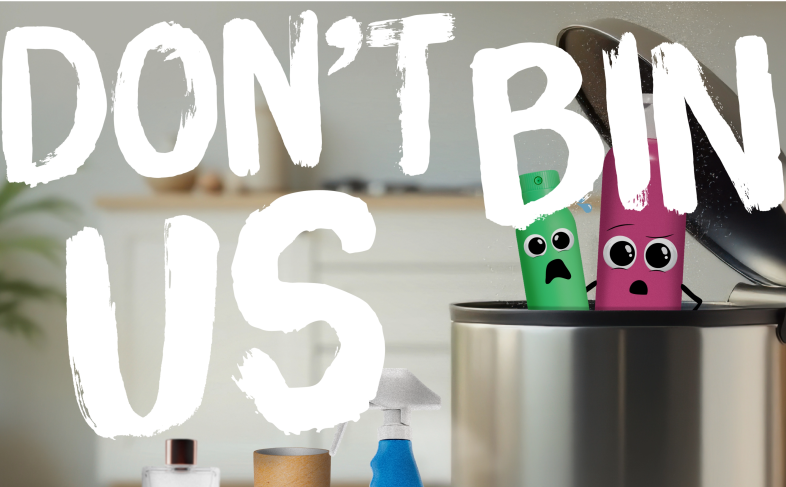
Recycling isn’t always perfect but every can, bottle, yoghurt pot and piece of paper you recycle helps reduce waste, save resources and protect our environment. From aerosols and shampoo bottles to foil and toilet roll tubes, many items we often bin can actually be recycled, and this Recycle Week we’re encouraging everyone to rescue just one more thing.
Dumfries and Galloway Council is committed to making recycling as easy and effective as possible. With your help, we can make a real difference. Visit the bins and recycling section of our website for help with what goes in each bin, garden waste permits, battery recycling, bulky uplifts and more.
Every small action adds up. Everything you recycle helps our region and our planet. So let’s rescue more, recycle more, starting today.